
 English
 Pусский
 한국어
한국어 中文
中文

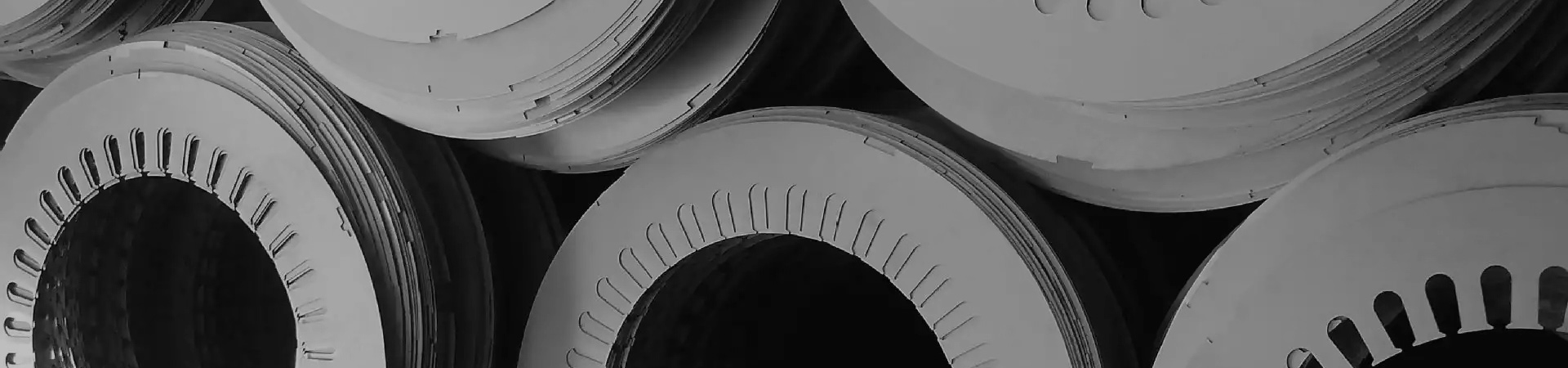
mạch từ stato động cơ
Motor Stator Magnetic Circuit The stator is a critical component in electric motors, serving as the stationary part that generates a rotating magnetic field to drive the rotor. The stator magnetic circuit plays a fundamental role in energy conversion, ensuring efficient electromagnetic interaction between the stator and rotor. 1. Structure and Materials The stator core is typically constructed from laminated silicon steel sheets to minimize eddy current losses. These laminations are stacked and insulated to reduce core losses caused by alternating magnetic fields. The stator core features slots where windings are placed, arranged in a specific pattern to produce a multipole magnetic field when energized. 2. Magnetic Flux Path When alternating current flows through the stator windings, a time-varying magnetic field is established. The magnetic flux travels through the stator core, forming a closed loop known as the magnetic circuit. The path includes: - Stator Teeth: The sections between slots concentrate flux to enhance magnetic coupling with the rotor. - Stator Yoke: The outer portion of the core completes the magnetic circuit, providing a low-reluctance path for flux return. 3. Key Design Considerations - Flux Density: Optimal flux density ensures efficient torque production without excessive core saturation. - Slot and Pole Configuration: The number of slots and poles affects harmonic content, torque ripple, and overall motor performance. - Air Gap: A small, uniform air gap between the stator and rotor minimizes reluctance and improves efficiency. 4. Losses and Efficiency Stator magnetic circuits contribute to several losses: - Hysteresis Losses: Due to cyclic magnetization of the core material. - Eddy Current Losses: Reduced by using thin laminations. - Copper Losses: Resulting from winding resistance. 5. Applications Stator magnetic circuits are used in various motor types, including induction, synchronous, and brushless DC motors. Their design directly impacts motor efficiency, power density, and thermal performance. Conclusion The stator magnetic circuit is essential for electromagnetic energy conversion in motors. Proper material selection, geometric design, and loss mitigation ensure high efficiency and reliability in diverse applications. Advances in materials and computational modeling continue to enhance stator performance, enabling more compact and energy-efficient motor designs.
Sản phẩm
Danh mục:
Không có kết quả tìm kiếm!
Tin tức
Danh mục:
-
[Industry News]Các lỗi thường gặp của Stator động cơ và chiến lược phòng ng...
2025-10-07 17:08:54
Trường hợp
Danh mục:
Không có kết quả tìm kiếm!
Video
Danh mục:
Không có kết quả tìm kiếm!
Tải về
Danh mục:
Không có kết quả tìm kiếm!
Tuyển dụng
Danh mục:
Không có kết quả tìm kiếm!
Sản phẩm được đề xuất
Không có kết quả tìm kiếm!
 Di động: +86 13738592999
 Điện thoại: +86(576) 89307999
 Email: sales@zjxinzheng.com
 Địa chỉ: Thành phố công nghiệp ven biển, Sanmen



 Whatsapp
 Điện thoại