
 English
 Pусский
 한국어
한국어 中文
中文

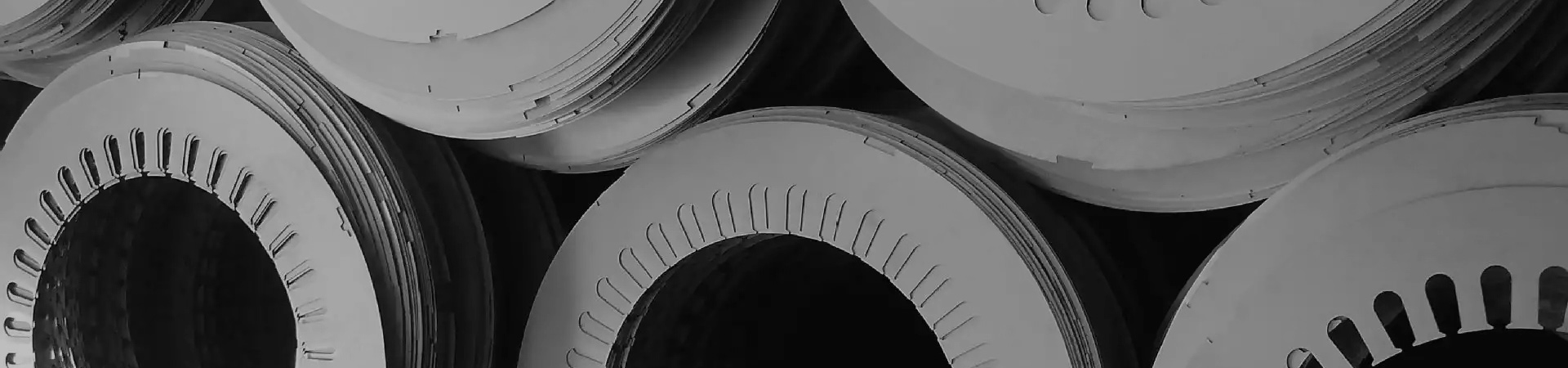
cán rôto động cơ
Motor Rotor Lamination: Design, Materials, and Manufacturing Motor rotor laminations are critical components in electric motors, serving as the core structure of the rotor. These thin, stacked steel sheets are designed to minimize energy losses, improve efficiency, and enhance motor performance. Below is a detailed overview of rotor laminations, covering their purpose, materials, design considerations, and manufacturing processes. Purpose and Function Rotor laminations are used to construct the rotor core, which interacts with the stator’s magnetic field to produce torque and rotation. By stacking multiple thin laminations instead of using a solid block of steel, eddy current losses are significantly reduced. This is because the insulated layers between laminations disrupt circulating currents, improving energy efficiency and reducing heat generation. Material Selection The most common material for rotor laminations is electrical steel (silicon steel), which offers low core loss and high magnetic permeability. The silicon content (typically 2-3.5%) reduces hysteresis losses while maintaining mechanical strength. Other materials, such as cobalt-iron alloys, may be used in high-performance applications where higher magnetic saturation is required. Each lamination is coated with an insulating layer (e.g., oxide, varnish, or phosphate) to prevent electrical contact between sheets, further minimizing eddy currents. Design Considerations Key design factors include: - Thickness: Laminations typically range from 0.1mm to 0.65mm, with thinner sheets offering lower losses but higher manufacturing costs. - Shape and Slot Configuration: The lamination profile is designed based on motor type (e.g., induction, synchronous, or BLDC). Slots may accommodate windings, permanent magnets, or squirrel-cage conductors. - Magnetic Flux Path: The geometry must optimize magnetic flux distribution to maximize torque and minimize cogging or vibration. Manufacturing Process 1. Blanking/Punching: Electrical steel coils are fed into a stamping press, where dies cut the laminations into the desired shape. 2. Heat Treatment: Annealing may be applied to relieve stress and enhance magnetic properties. 3. Insulation Coating: A thin insulation layer is applied to each lamination. 4. Stacking and Bonding: Laminations are stacked and secured using welding, interlocking tabs, or adhesives to form a rigid rotor core. 5. Finishing: The rotor core may undergo machining or balancing to ensure smooth operation. Applications Rotor laminations are used in various motors, including industrial motors, automotive traction motors, HVAC systems, and appliances. Their efficiency and reliability make them essential for modern electric and hybrid vehicles. Conclusion Motor rotor laminations play a vital role in motor performance by reducing energy losses and improving electromagnetic efficiency. Advances in materials and manufacturing continue to enhance their effectiveness, supporting the growing demand for high-efficiency electric motors.
Sản phẩm
Danh mục:
Không có kết quả tìm kiếm!
Tin tức
Danh mục:
-
[Industry News]Các sự cố thường gặp với rôto động cơ và cách khắc phục chún...
2025-10-07 16:05:07 -
[Company News]Những điều cần thiết về động lực học rôto động cơ dành cho k...
2025-10-07 16:43:34
Trường hợp
Danh mục:
Không có kết quả tìm kiếm!
Video
Danh mục:
Không có kết quả tìm kiếm!
Tải về
Danh mục:
Không có kết quả tìm kiếm!
Tuyển dụng
Danh mục:
Không có kết quả tìm kiếm!
Sản phẩm được đề xuất
Không có kết quả tìm kiếm!
 Di động: +86 13738592999
 Điện thoại: +86(576) 89307999
 Email: sales@zjxinzheng.com
 Địa chỉ: Thành phố công nghiệp ven biển, Sanmen



 Whatsapp
 Điện thoại