
 English
 Pусский
 한국어
한국어 中文
中文

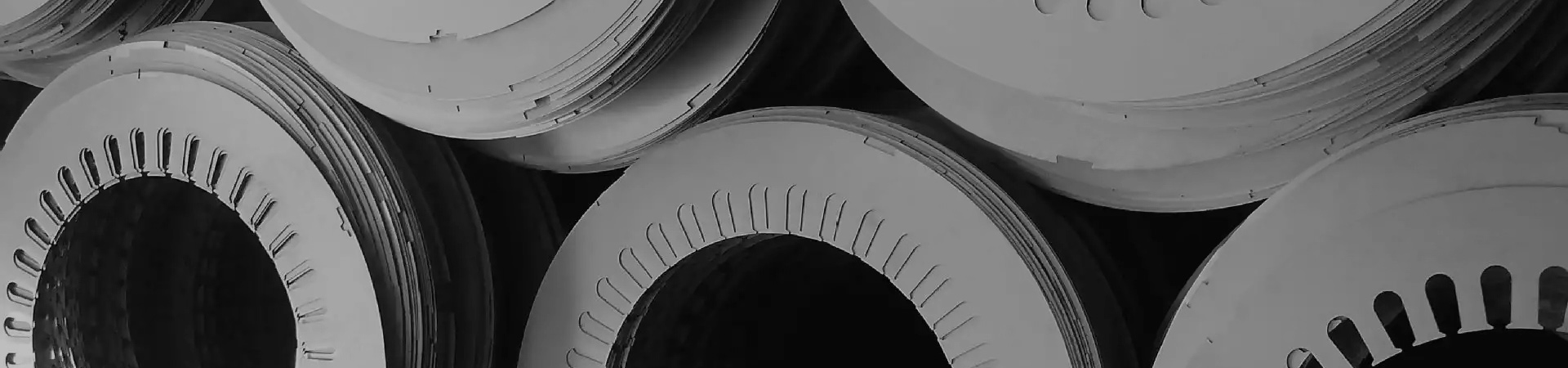
tối ưu hóa thiết kế stato động cơ
Motor Stator Design Optimization Motor stator design optimization is a critical process in improving the performance, efficiency, and reliability of electric motors. The stator, as the stationary part of the motor, plays a key role in electromagnetic energy conversion, influencing torque production, losses, thermal behavior, and overall system efficiency. Optimizing its design involves balancing multiple factors, including material selection, geometry, winding configuration, and manufacturing constraints. Key Optimization Objectives 1. Efficiency Improvement – Reducing core losses (hysteresis and eddy current losses) and copper losses (I²R losses) is essential. This can be achieved by selecting high-grade electrical steel with low iron losses, optimizing lamination thickness, and refining slot-pole combinations. 2. Torque Density Enhancement – Increasing torque output without significantly raising motor size requires optimizing the stator slot shape, tooth width, and winding distribution. Techniques like fractional-slot concentrated windings (FSCW) can improve torque ripple and power density. 3. Thermal Management – Efficient heat dissipation is crucial for preventing overheating and insulation degradation. Stator cooling can be improved by optimizing slot fill factor, winding arrangements, and integrating cooling channels. 4. Manufacturability & Cost – The design must balance performance with production feasibility. Automated winding techniques, modular stator designs, and material cost reduction strategies are often considered. Optimization Techniques - Electromagnetic Simulation – Finite element analysis (FEA) tools help evaluate magnetic flux distribution, losses, and torque characteristics under different operating conditions. - Multi-Objective Optimization – Algorithms like genetic algorithms (GA) or particle swarm optimization (PSO) can simultaneously optimize efficiency, torque, and thermal performance. - Topology Optimization – Advanced computational methods refine stator geometry to minimize weight while maintaining structural integrity. - Experimental Validation – Prototyping and testing validate simulation results, ensuring real-world applicability. Challenges & Future Trends Challenges include trade-offs between efficiency and cost, material limitations, and high-frequency loss effects in high-speed applications. Future trends may involve AI-driven design automation, advanced magnetic materials (e.g., amorphous alloys), and additive manufacturing for customized stator topologies. In summary, stator design optimization is a multidisciplinary effort that integrates electromagnetic, thermal, and mechanical considerations to achieve high-performance, cost-effective motor solutions. Continuous advancements in simulation tools, materials, and manufacturing techniques will further enhance motor capabilities.
Sản phẩm
Danh mục:
Không có kết quả tìm kiếm!
Tin tức
Danh mục:
-
[Industry News]Lợi ích của việc sử dụng Stator động cơ chất lượng cao trong...
2025-10-07 16:26:52 -
[Company News]Lời khuyên để chọn Stator động cơ phù hợp trong hệ thống HVA...
2025-10-08 09:01:33
Trường hợp
Danh mục:
Không có kết quả tìm kiếm!
Video
Danh mục:
Không có kết quả tìm kiếm!
Tải về
Danh mục:
Không có kết quả tìm kiếm!
Tuyển dụng
Danh mục:
Không có kết quả tìm kiếm!
Sản phẩm được đề xuất
Không có kết quả tìm kiếm!
 Di động: +86 13738592999
 Điện thoại: +86(576) 89307999
 Email: sales@zjxinzheng.com
 Địa chỉ: Thành phố công nghiệp ven biển, Sanmen



 Whatsapp
 Điện thoại