
 English
 Pусский
 한국어
한국어 中文
中文

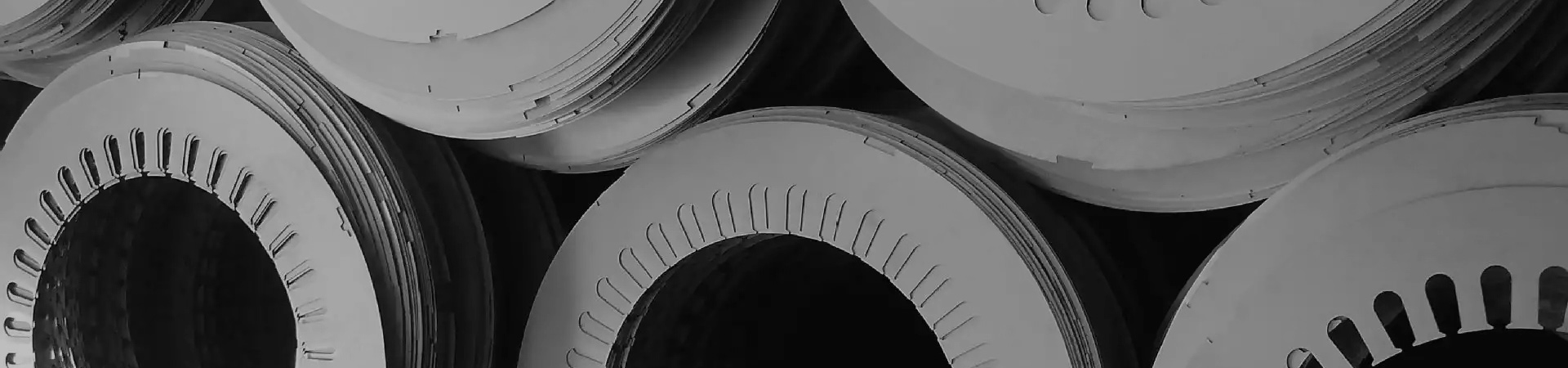
quy trình sản xuất rôto động cơ
Motor Rotor Manufacturing Process The manufacturing process of a motor rotor involves several precise steps to ensure optimal performance, efficiency, and durability. Below is a detailed overview of the key stages in rotor production: 1. Material Selection The rotor core is typically made from high-quality electrical steel laminations (silicon steel) to minimize eddy current losses. The choice of material depends on the motor’s application, power requirements, and efficiency standards. 2. Lamination Stacking Thin steel laminations are stamped or laser-cut into circular shapes with slots for rotor bars or windings. These laminations are stacked and bonded using adhesives, welding, or interlocking mechanisms to form the rotor core. The laminated structure reduces energy losses caused by alternating magnetic fields. 3. Rotor Bar Insertion (for Squirrel Cage Rotors) For induction motors, conductive bars (usually aluminum or copper) are inserted into the rotor slots. These bars are short-circuited at both ends by end rings, forming a "squirrel cage" structure. The bars can be die-cast (for aluminum) or manually inserted and welded (for copper). 4. Permanent Magnet Assembly (for PM Rotors) In permanent magnet (PM) rotors, high-strength magnets (e.g., neodymium or ferrite) are embedded or surface-mounted onto the rotor core. The magnets are secured using adhesives, mechanical fixtures, or retention sleeves to withstand centrifugal forces. 5. Shaft Assembly The rotor core is mounted onto a precision-machined steel shaft. The shaft must be perfectly aligned to prevent vibration and ensure smooth rotation. Press-fitting, keyways, or thermal expansion methods are used for secure attachment. 6. Balancing Dynamic balancing is critical to minimize vibration and noise. The rotor is spun at high speed, and imbalances are corrected by adding or removing material (e.g., drilling holes or applying balancing weights). 7. Insulation & Coating (if applicable) For wound rotors, insulated copper windings are installed, and varnish or resin is applied to protect against moisture and mechanical stress. Some rotors may also receive anti-corrosion coatings. 8. Quality Testing Final inspections include electrical tests (resistance, insulation checks), mechanical tests (runout, concentricity), and performance validation under simulated operating conditions. Conclusion The rotor manufacturing process requires precision engineering to ensure reliability and efficiency. Each step—from lamination stacking to balancing—plays a crucial role in the motor’s performance. Advances in automation and material science continue to enhance rotor production for modern electric motors. (Word count: 500)
Sản phẩm
Danh mục:
Không có kết quả tìm kiếm!
Tin tức
Danh mục:
-
[FAQ]Tìm hiểu về cân bằng rôto động cơ để vận hành trơn tru
2025-10-07 16:23:42 -
[Industry News]Những cân nhắc về thiết kế rôto động cơ cho các ứng dụng tốc...
2025-10-08 08:59:31
Trường hợp
Danh mục:
Không có kết quả tìm kiếm!
Video
Danh mục:
Không có kết quả tìm kiếm!
Tải về
Danh mục:
Không có kết quả tìm kiếm!
Tuyển dụng
Danh mục:
Không có kết quả tìm kiếm!
Sản phẩm được đề xuất
Không có kết quả tìm kiếm!
 Di động: +86 13738592999
 Điện thoại: +86(576) 89307999
 Email: sales@zjxinzheng.com
 Địa chỉ: Thành phố công nghiệp ven biển, Sanmen



 Whatsapp
 Điện thoại