
 English
 Pусский
 한국어
한국어 中文
中文

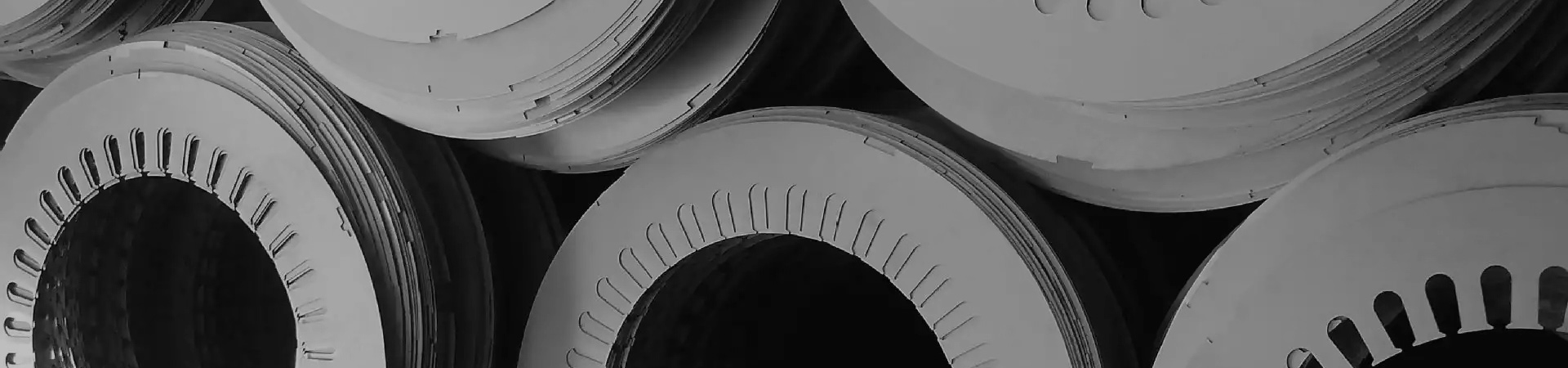
giảm tổn thất lõi rôto động cơ
Motor Rotor Core Loss Reduction Techniques Core loss in motor rotors, also known as iron loss, is a significant contributor to energy inefficiency in electric motors. It primarily consists of hysteresis loss and eddy current loss, both of which generate heat and reduce overall motor performance. Reducing rotor core loss is essential for improving efficiency, lowering operating temperatures, and extending motor lifespan. Below are key strategies for minimizing rotor core losses. 1. Material Selection The choice of core material significantly impacts hysteresis and eddy current losses. High-quality electrical steel with low coercivity and high resistivity is preferred. Silicon steel laminations are commonly used due to their reduced hysteresis loss and increased resistance to eddy currents. Advanced amorphous or nanocrystalline materials offer even lower core losses but may be cost-prohibitive for some applications. 2. Lamination Thickness Optimization Thinner laminations reduce eddy current losses by increasing the electrical resistance between layers. Typical lamination thicknesses range from 0.1 mm to 0.5 mm, with thinner laminations being more effective at high frequencies. However, excessive thinning increases manufacturing complexity and cost, so a balance must be struck. 3. Insulation Coating Applying an insulating coating (e.g., oxide or varnish) between laminations further reduces eddy currents by preventing electrical contact between layers. Proper coating ensures minimal inter-lamination current flow while maintaining mechanical integrity. 4. Rotor Design Optimization - Slot and Pole Configuration: Adjusting the number of poles and slots can reduce harmonic losses, which contribute to core heating. - Flux Path Optimization: Smoothing flux distribution through careful magnetic circuit design minimizes localized saturation and hysteresis losses. - Air Gap Adjustment: A well-designed air gap reduces unnecessary flux leakage, improving efficiency. 5. Advanced Manufacturing Techniques Precision stamping and laser cutting reduce mechanical stress on laminations, preserving magnetic properties. Annealing after cutting can restore grain orientation and reduce hysteresis loss. 6. Thermal Management While not directly reducing core loss, effective cooling (e.g., forced air or liquid cooling) mitigates temperature rise, indirectly improving performance by preventing material degradation at high temperatures. Conclusion Reducing rotor core loss requires a multi-faceted approach involving material selection, lamination design, insulation, and advanced manufacturing. Each method has trade-offs in cost, complexity, and performance, so the optimal solution depends on the specific motor application. By implementing these techniques, motor efficiency can be significantly enhanced, leading to energy savings and longer operational life.
Sản phẩm
Danh mục:
Không có kết quả tìm kiếm!
Tin tức
Danh mục:
-
[Industry News]Tác động của tốc độ rôto động cơ đến hiệu quả năng lượng
2025-10-07 16:34:38 -
[Industry News]Những cân nhắc về thiết kế rôto động cơ cho các ứng dụng tốc...
2025-10-08 08:59:31
Trường hợp
Danh mục:
Không có kết quả tìm kiếm!
Video
Danh mục:
Không có kết quả tìm kiếm!
Tải về
Danh mục:
Không có kết quả tìm kiếm!
Tuyển dụng
Danh mục:
Không có kết quả tìm kiếm!
Sản phẩm được đề xuất
Không có kết quả tìm kiếm!
 Di động: +86 13738592999
 Điện thoại: +86(576) 89307999
 Email: sales@zjxinzheng.com
 Địa chỉ: Thành phố công nghiệp ven biển, Sanmen



 Whatsapp
 Điện thoại