
 English
 Pусский
 한국어
한국어 中文
中文

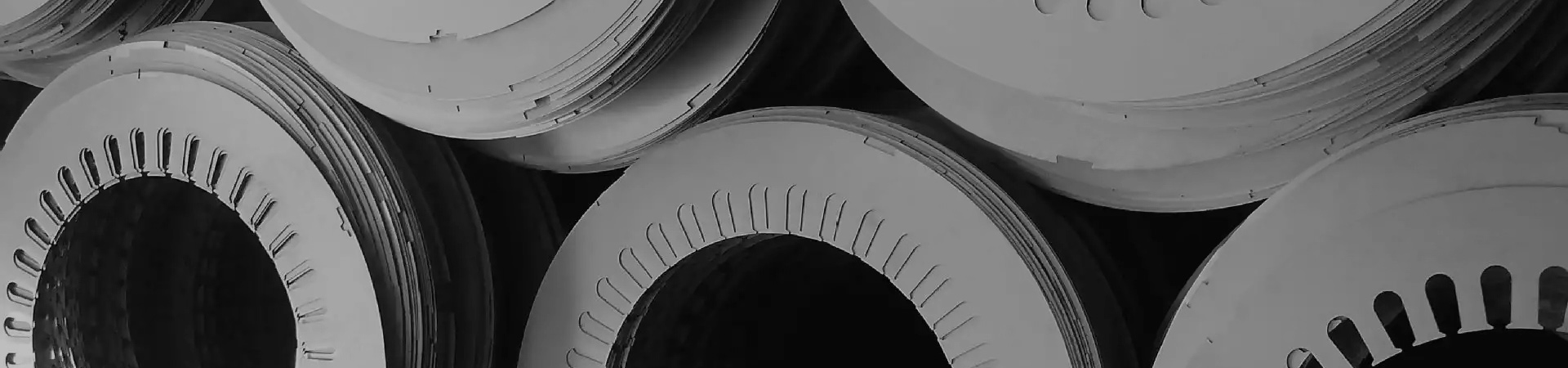
High-temperature resistant YE4 motor laminations design
Design of High-Temperature Resistant YE4 Motor Laminations The design of high-temperature resistant laminations for YE4 motors is critical to ensure optimal performance, energy efficiency, and durability under elevated operating conditions. These laminations must address thermal stability, core losses, and mechanical integrity while meeting stringent efficiency standards. Below are the key considerations in their design: 1. Material Selection The core material must exhibit low core losses and high thermal resistance. Silicon steel (electrical steel) with a high silicon content (typically 2-3%) is commonly used due to its excellent magnetic properties and reduced hysteresis losses. For high-temperature applications, grain-oriented or non-oriented silicon steel with improved thermal stability is preferred. Advanced coatings, such as inorganic insulation layers, are applied to minimize eddy current losses and withstand temperatures exceeding 200°C. 2. Lamination Thickness and Stacking Thinner laminations (typically 0.35mm or 0.5mm) reduce eddy current losses, but the trade-off between manufacturing complexity and performance must be balanced. The stacking process must ensure tight tolerances to prevent air gaps, which can increase magnetic reluctance and heat generation. Laser cutting or precision stamping is employed to maintain dimensional accuracy. 3. Insulation and Coating High-temperature-resistant insulation coatings, such as phosphate or ceramic-based layers, are applied to prevent interlamination short circuits. These coatings must remain stable under thermal cycling and mechanical stress. Additionally, oxidation-resistant treatments are used to protect the laminations in harsh environments. 4. Thermal Management Integration The lamination design should facilitate efficient heat dissipation. Ventilation slots or cooling ducts may be incorporated into the stator core to enhance airflow. The use of thermally conductive adhesives or bonding techniques can improve heat transfer from the core to the motor housing. 5. Mechanical Robustness High temperatures can cause thermal expansion, leading to deformation. The lamination design must account for thermal stress by selecting materials with matched coefficients of thermal expansion. Precision stacking and clamping mechanisms ensure structural integrity under thermal cycling. 6. Efficiency Optimization To meet IE4 efficiency standards, the core losses (hysteresis and eddy current losses) must be minimized. This involves optimizing the magnetic flux path, reducing harmonic losses, and ensuring uniform material properties. Finite element analysis (FEA) is often used to simulate performance under high-temperature conditions. Conclusion The design of high-temperature-resistant YE4 motor laminations requires a multidisciplinary approach, combining advanced materials, precision manufacturing, and thermal management strategies. By focusing on low-loss materials, robust insulation, and efficient cooling, these laminations can deliver reliable performance in demanding applications while maintaining energy efficiency. Future advancements may explore nanocrystalline alloys or hybrid materials for even higher temperature resistance and reduced losses.
Sản phẩm
Danh mục:
-
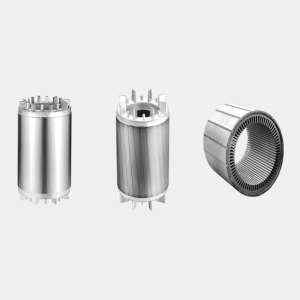
Rôto Stator động cơ điện
Phân loại của họ: Stator và RotorLượt xem: 116Số:Thời gian phát hành: 2025-10-07 08:45:12Stator và Rotor động cơ điện: Thành phần cốt lõi của hệ thống cơ điệnĐộng cơ điện là nền tảng của công nghệ hiện đại, cung cấp năng lượng cho mọi thứ từ thiết bị gia dụng đến máy móc công nghiệp. Trung tâm của mỗi động cơ điện là hai bộ phận quan trọng: stato và rôto. Những bộ phận này hoạt động song song để chuyển đổi năng lượng điện thành chuyển động cơ học. Hiểu thiết kế, chức năng và sự tương tác của chúng là điều cần thiết để nắm bắt cách thức hoạt động của động cơ điện.1. Giới thiệu về Stator và RotorStator là bộ phận đứng yên của động cơ điện, còn rôto là bộ phận quay. Cùng nhau, chúng...
Tin tức
Danh mục:
Không có kết quả tìm kiếm!
Trường hợp
Danh mục:
Không có kết quả tìm kiếm!
Video
Danh mục:
Không có kết quả tìm kiếm!
Tải về
Danh mục:
Không có kết quả tìm kiếm!
Tuyển dụng
Danh mục:
Không có kết quả tìm kiếm!
Sản phẩm được đề xuất
Không có kết quả tìm kiếm!
 Di động: +86 13738592999
 Điện thoại: +86(576) 89307999
 Email: sales@zjxinzheng.com
 Địa chỉ: Thành phố công nghiệp ven biển, Sanmen



 Whatsapp
 Điện thoại