

High-Precision Y1 Motor Laminations for Energy-Efficient Motor Cores
Industry Background and Market Demand
The global push for energy efficiency and sustainable industrial solutions has significantly increased the demand for high-performance electric motors. Electric motors account for nearly half of industrial electricity consumption worldwide, making energy savings a priority for manufacturers. Within this context, the design and fabrication of motor cores, particularly the laminations used in stators and rotors, play a critical role in reducing core losses and improving overall motor efficiency. The Y1 series motor laminations have emerged as a preferred choice for energy-efficient motors, offering precise geometric conformity and optimized magnetic properties.
Core Concepts and Technical Overview
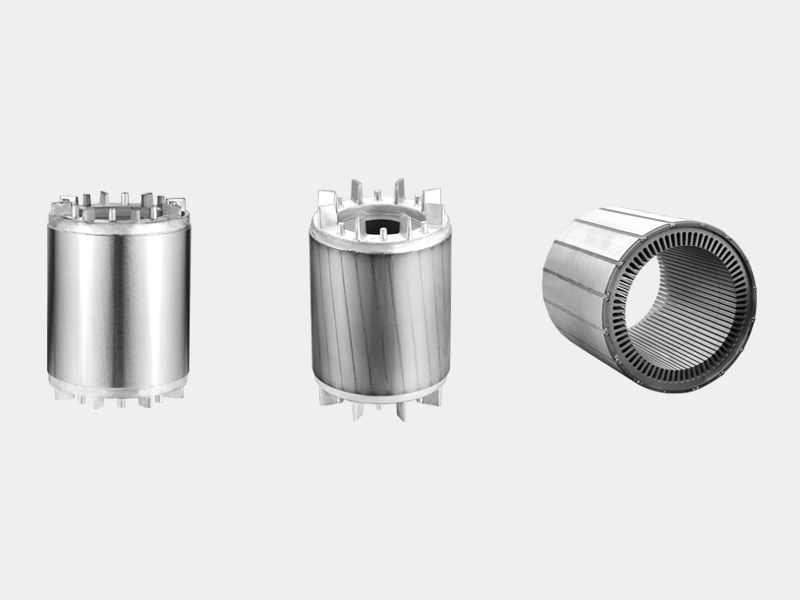
Motor laminations are thin sheets of electrical steel stacked to form the stator and rotor cores of electric motors. Their primary function is to guide magnetic flux while minimizing eddy current losses. High-precision laminations, such as the Y1 series, are engineered to tight tolerances, ensuring uniform magnetic paths and consistent performance. Core losses, typically categorized into hysteresis and eddy current losses, can be substantially reduced with thinner, accurately cut laminations. Additionally, the Y1 series often incorporates electrical steel with superior silicon content, further enhancing magnetic permeability and reducing energy dissipation.
Structure, Materials, and Manufacturing Process
Y1 motor laminations are generally produced from high-grade silicon steel with a typical thickness ranging from 0.35 mm to 0.50 mm. The manufacturing process begins with precision slitting and blanking to achieve uniform shapes and dimensions. Advanced stamping or laser cutting techniques ensure minimal burr formation and dimensional deviations, which directly influence motor performance. After cutting, laminations may undergo annealing to relieve internal stresses and improve magnetic properties. Insulating coatings are applied to reduce inter-laminar eddy currents, which are a common source of efficiency loss in high-speed motors.
Factors Affecting Quality and Performance
Several factors determine the effectiveness of Y1 laminations in energy-efficient motors. Dimensional accuracy is critical: deviations in tooth width, core length, or stacking height can cause uneven magnetic flux distribution and increased vibration. Material selection, including silicon content, grain orientation, and electrical resistivity, significantly impacts core losses. Surface treatment and coating uniformity are also essential, as inconsistencies can lead to localized eddy currents. Finally, precise assembly and stacking techniques are necessary to maintain tight tolerances and ensure consistent performance across production batches.
Supply Chain Considerations
Selecting reliable suppliers for Y1 motor laminations involves evaluating their capability in precision cutting, material quality, and process control. Suppliers should provide certifications for material composition and magnetic properties, and ideally have experience serving industrial and energy-efficient motor manufacturers. Supply chain stability is critical, especially when dealing with thin laminations where material sourcing and production precision can directly affect delivery timelines and motor performance.
Common Industry Challenges
Despite advances in manufacturing, several challenges persist in the production and application of motor laminations. Warping during stamping, inconsistent coating thickness, and variation in steel grain orientation can lead to reduced motor efficiency and increased noise. Another common issue is the trade-off between lamination thickness and mechanical strength; while thinner laminations reduce eddy currents, they can be more prone to deformation under high-speed rotation. Addressing these challenges requires a combination of advanced materials, precise tooling, and rigorous quality control.
Applications and Case Studies
High-precision Y1 laminations are widely used in industrial motors, HVAC systems, renewable energy applications such as wind turbines, and electric vehicle traction motors. In a case study involving a medium-voltage industrial motor, replacing standard laminations with Y1 high-precision sheets reduced core losses by approximately 12%, resulting in measurable energy savings and lower operational costs. Similarly, in traction motors for electric vehicles, the use of thin, accurately cut laminations contributed to improved torque density and extended battery range.
Trends and Future Developments
The future of motor laminations is closely tied to the evolution of energy-efficient motor technologies. Ultra-thin laminations with advanced insulating coatings are gaining traction for high-speed and high-efficiency applications. Additionally, new steel formulations with higher saturation flux density and lower core losses are being developed to meet stricter energy standards. Digitalization and automation in lamination manufacturing, including laser cutting and robotic stacking, are expected to further enhance precision, consistency, and scalability.
FAQ / Key Questions
Why are high-precision laminations important for motor efficiency?
Precise laminations reduce core losses and ensure uniform magnetic flux, directly improving motor efficiency.
How does lamination thickness affect performance?
Thinner laminations reduce eddy current losses but require careful handling and stress management to avoid deformation.
What materials are typically used for Y1 laminations?
High-silicon electrical steel with controlled grain orientation and low core loss characteristics is standard.
In conclusion, high-precision Y1 motor laminations represent a critical component in designing energy-efficient motor cores. Their performance depends on accurate manufacturing, superior materials, and careful assembly. As energy efficiency standards become more stringent and industrial applications more demanding, Y1 laminations will continue to play a vital role in modern motor design.
 Di động: +86 13738592999
 Điện thoại: +86(576) 89307999
 Email: sales@zjxinzheng.com
 Địa chỉ: Thành phố công nghiệp ven biển, Sanmen
Huyện, thành phố Thái Châu, tỉnh Chiết Giang, Trung Quốc
Bản quyền © Công ty TNHH Công nghệ Cơ điện Chiết Giang Xinzheng Mọi quyền được bảo lưu.
Trang web này sử dụng cookie để đảm bảo bạn có được trải nghiệm tốt nhất trên trang web của chúng tôi.

 English
 Pусский
 한국어
한국어 中文
中文



 Whatsapp
 Điện thoại
Bình luận
(0)